
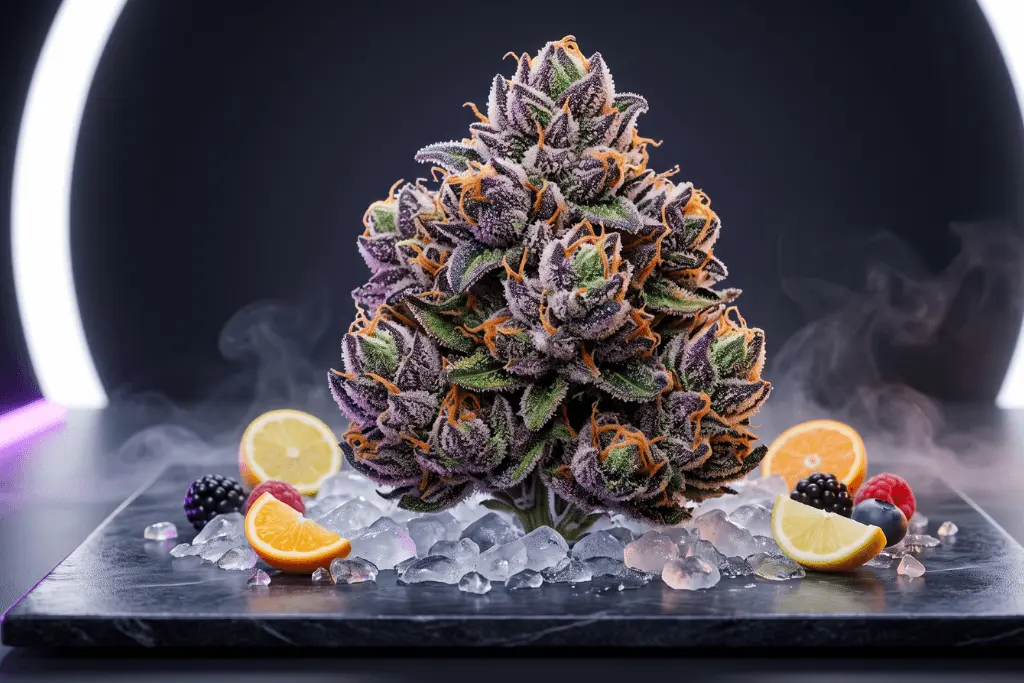
The cannabis market is growing fast today. Therefore, many people want strong hybrid strains with rich scents. Among these choices, the Italian Ice strain is very popular. In fact, it is known for its high strength. The breeder Cali Connection created this strain. To do this, they crossed Gelato 33 with Forbidden Fruit.
First, Gelato 33 comes from Sunset Sherbert and Thin Mint Girl Scout Cookies. Thus, it gives the plant dense flowers and sticky resin. It also adds a sweet, creamy aroma. Next, the parent Forbidden Fruit comes from Cherry Pie and Tangie. As a result, it adds bright purple colours. It also adds a rich scent of sour citrus and berries.
Overall, this plant is 60% Indica and 40% sativa. Consequently, the Italian Ice strain makes high levels of THC. It also contains many sweet scents called terpenes.
| Biological and Genomic Parameter | Cultivar Specification |
|---|---|
| Primary Cultivar Name | Italian Ice Strain |
| Originating Breeder | Cali Connection |
| Parental Lineage | Gelato 45 x Forbidden Fruit |
| Taxonomic Lean | 60% Indica / 40% Sativa Hybrid |
| Chemovar Classification | Type I THC-Dominant |
| THC Concentration Range | 15.0% – 30.0% (Phenotype Dependent) |
| CBD Concentration Range | 0.52% – 1.36% |
| Primary Dominant Terpenes | Linalool, Myrcene, beta-Caryophyllene |
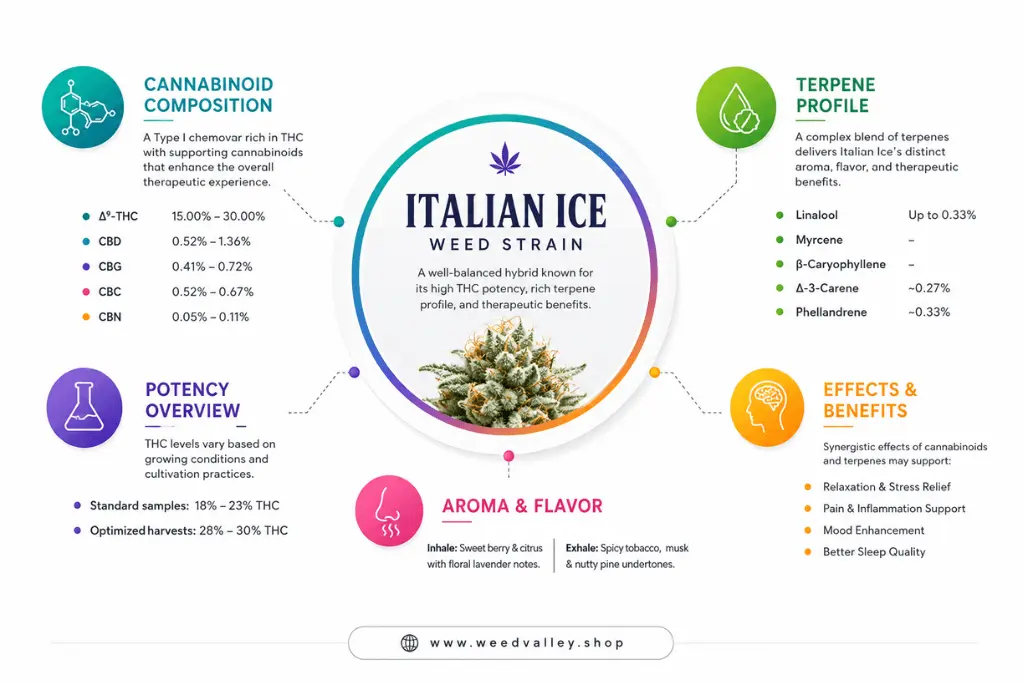
Phytochemical Profiling & Cannabinoid Dynamics of Italian Ice Strain
The strength of the Italian Ice strain comes from its chemical mix. Specifically, it has major and minor cannabinoids. This plant is a high-THC strain. Therefore, it produces strong effects. However, it also has small amounts of CBD, CBG, CBC, and CBN.
| Cannabinoid Constituent | Concentration Range (%) | Molecular Interactions & Receptor Targets |
| Delta-9-THC | 15.00% – 30.00% | Binds to CB1 and CB2 receptors; drives brain euphoria |
| Cannabidiol (CBD) | 0.52% – 1.36% | Modulates CB1; acts on 5-HT1A serotonin receptors |
| Cannabigerol (CBG) | 0.41% – 0.72% | Acts on alpha-2 receptors; supports eye pressure balance |
| Cannabichromene (CBC) | 0.52% – 0.67% | Agonist at TRPA1 channels; helps boost body compounds |
| Cannabinol (CBN) | 0.05% – 0.11% | Weak CB1/CB2 affinity; aged byproduct causing sleepiness |
The total THC amount depends on how the plant grows. For example, standard crops yield between 18% and 23% THC. However, top craft growers can reach 28% to 30% THC.
In addition, the smell and taste depend on terpenes. Rather than having a simple scent, this strain has a rich mix. Specifically, this mix features linalool, myrcene, beta-caryophyllene, carene, and phellandrene.
| Terpene Compound | Chemical Classification | Relative Abundance | Flavour & Olfactory Characteristics | Therapeutic & Pharmacological Action |
| Linalool | Monoterpene | Primary Dominant (up to 0.33%) | Floral, Lavender, Sweet Spice | Calms brain activity, modulates GABA_A, lowers anxiety |
| Myrcene | Monoterpene | Primary Co-Dominant | Earthy, Musky, Clove, Herbal | Relaxes muscles, promotes calm, aids absorption |
| beta-Caryophyllene | Sesquiterpene | Secondary Major | Spicy Black Pepper, Wood, Tobacco | Binds to peripheral CB2 receptors, reduces swelling |
| Delta-3-Carene | Monoterpene | Secondary Trace (approx. 0.27%) | Sweet Citrus, Pine, Cypress | Anti-inflammatory, reduces fluid build-up, supports bones |
| Phellandrene | Monoterpene | Trace Constituent (approx. 0.33%) | Peppery, Minty, Sour Citrus | Eases pain, supports positive mood |
Indeed, reviews often praise this rich terpene mix. For instance, linalool and caryophyllene create a sweet berry flavour when you inhale. Then, the exhale brings spicy, woodsy, and pine notes.
Italian Ice strain and Horticultural Cultivation Protocols
Botanically, this plant shows both Indica and sativa traits. During early growth, the plant grows wide with strong stems and dark leaves. Next, when flowering starts, it forms tight, grape-shaped buds.
Visually, the dried buds look stunning. For example, tight buds show deep green and bright purple colours. Furthermore, these purple shades appear when nights turn cool during late bloom. Finally, orange hairs and sticky crystals cover the flowers.
| Cultivation Parameter | Indoor Environment | Outdoor Environment |
| Horticultural Difficulty | Intermediate | Intermediate |
| Photoperiod Cycle | 9 to 11 Weeks (69–74 Days) | Late September to Mid-October |
| Plant Height | Medium (90 cm – 140 cm) | Medium to Tall (120 cm – 180 cm) |
| Yield Efficiency | 300 – 350 g/m² | 400 – 500 g/plant |
| Target Temperature Range | 20°C – 26°C (68°F – 78°F) | Mild, Temperate to Mediterranean |
| Relative Humidity (RH) | Vegetative: 60-70% | Flowering: 40-50% | Dry Autumn Conditions Preferred |
| Recommended Canopy Methods | Topping, Low-Stress Training (LST), Main-lining | Trellising and Selective Defoliation |
The Italian Ice plant grows dense leaves. Therefore, growers must trim the plants often. For instance, cutting top stems and removing excess leaves improves air movement. As a result, this prevents mold and keeps plants healthy.
Pharmacological Mechanisms, Therapeutic Efficacy, and Safety Profile
The effects of the Italian Ice strain happen in two stages. First, inhaling THC quickly sends it to the brain. Consequently, this action boosts dopamine. As a result, users feel happy, focused, and clear-headed.
Later, after 30 to 60 minutes, terpenes like linalool and myrcene take effect. Therefore, users feel deep body relaxation. Specifically, these compounds soothe tired muscles and ease body stress. Yet, moderate amounts do not cause heavy sleepiness right away.
| Clinical Indication / Symptom Target | Therapeutic Response Rate | Underlying Phytochemical Mechanism |
| Anxiety and Stress Management | High (26% of consumers report relief) | Linalool and myrcene GABA_A modulation |
| Chronic Neuropathic Pain | High Relief | Delta-9-THC CB1 action with caryophyllene CB2 response |
| Depressive Episodes | Moderate (12% of consumers report relief) | Dopamine stimulation from Delta-9-THC and phellandrene |
| Sleep Disturbance & Insomnia | High Relief (Late-Stage Use) | Myrcene and CBN combined relaxing effect |
However, because this strain is strong, users must start with small amounts. This is especially true for beginners. For example, common side effects are dry mouth and dry eyes. Additionally, taking too much may cause mild dizziness or anxiety.
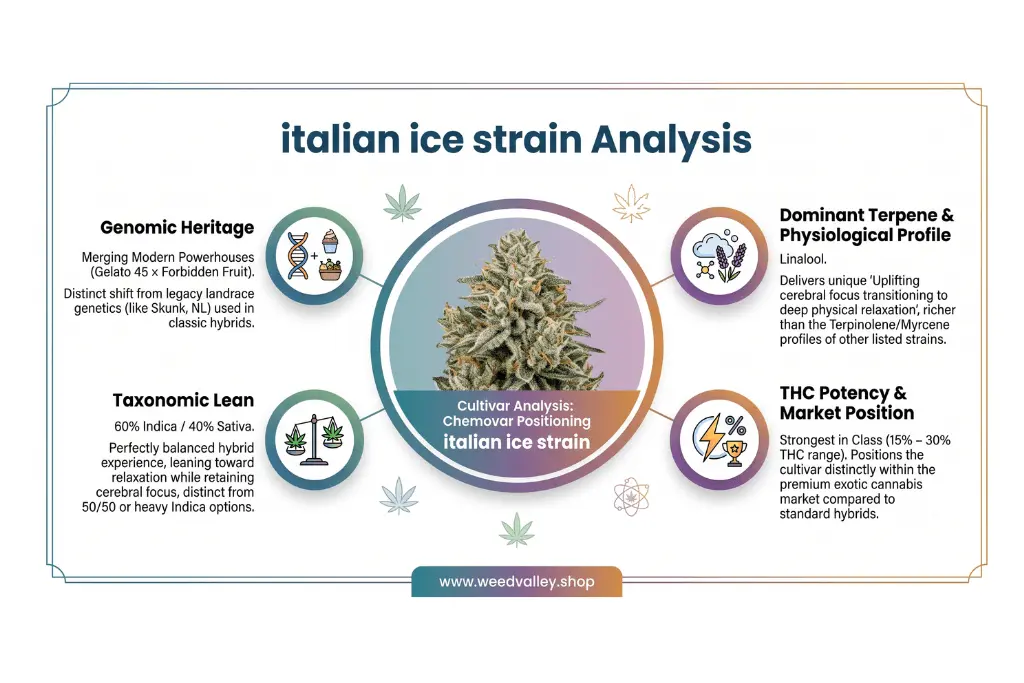
Italian ice strain Analysis
Comparing Italian Ice with its parent strains shows why it is special. In fact, its unique traits set it apart in the market.
| Cultivar Name | Genomic Heritage | Taxonomic Lean | Dominant Terpene | Average THC (%) | Primary Physiological Profile |
| Italian ice strain | Gelato 45 x Forbidden Fruit | 60% Indica / 40% Sativa | Linalool | 15% – 30% | Clear focus followed by deep body relaxation |
| Gelato 45 | Sunset Sherbert x Thin Mint GSC | 50% Indica / 50% Sativa | beta-Caryophyllene | 20% – 25% | Balanced happy feeling with gentle body relief |
| Forbidden Fruit | Cherry Pie x Tangie | 70% Indica / 30% Sativa | Myrcene | 15% – 23% | Heavy body calm with dark fruit scents |
| Ice (Legacy Cup Winner) | Skunk #1 x NL x Shiva x Afghani | 50% Indica / 50% Sativa | Terpinolene | 18% – 20% | Energetic head high with spicy diesel taste |
| Sunset Sherbert | Girl Scout Cookies x Pink Panties | 85% Indica / 15% Sativa | beta-Caryophyllene | 15% – 19% | Soothing body buzz with sweet dessert notes |
For example, older strains like Ice rely on classic landrace genes. However, the modern Italian Ice strain offers a sweeter taste. That is because it comes from famous Cookies and Tangie plant lines.
Regional Retail Distribution & Market Logistics of Italian ice strain
Demand for sweet dessert strains is growing fast in legal markets today. Specifically, cities like Washington, D.C. see strong sales. In addition, buyers in these areas prefer strains with famous parents, purple colours, and balanced effects.
Today, dispensaries and delivery services work fast to meet demand. For example, local delivery services in Washington, D.C. ship products directly to customers. Furthermore, stores offer online ordering, pickup, and home delivery options.
In addition, clear lab tests build trust with customers. Good product selection also boosts confidence. Therefore, selling tested Italian Ice products helps stores build loyal customers.
Frequently Asked Questions (FAQs)
Q : Is Italian Ice Indica or sativa?
A : Laboratory tests confirm that Italian Ice is a 60% Indica and 40% Sativa hybrid. Therefore, it offers body relaxation along with a clear mind. As a result, users stay calm, happy, and social.
Q : What makes Italian Ice so good?
A : The strength of Italian Ice comes from its famous parents and rich smell. For example, crossing Gelato 45 and Forbidden Fruit creates a sweet fruit and cream taste. Furthermore, with high THC levels up to 30%, it works great for many users.
Q : What strain is associated with Elon Musk?
A : People linked Elon Musk to cannabis after his 2018 interview with Joe Rogan. During the show, Musk tried a rolled spliff on camera. Although rumours connect him to Gelato or OG Kush, the actual strain was never named.
Q : What Italian ice strain does Snoop Dogg use?
A : Snoop Dogg enjoys many top Indica and hybrid strains. However, he is famous for using Granddaddy Purple, OG Kush, and Snoop’s Premium. In fact, he prefers heavy Indica strains that relax the body.
Q : What exactly is Italian ice?
A : In food, Italian ice is a cold treat made from fruit juice, water, and ice. However, in cannabis, Italian Ice is a hybrid strain from Gelato 45 and Forbidden Fruit. In fact, it got this name because its sweet fruit flavour tastes like the cold dessert.
Synthesis and Strategic Market Outlook
This Italian Ice strain review shows why this 60/40 hybrid is so popular today. By crossing Gelato 45 with Forbidden Fruit, Cali Connection created a great strain with purple buds, rich fruit flavour, and strong effects.
Today, buyers want rich smells and high THC. Therefore, Italian Ice remains a top choice for breeders and growers. Overall, it stands as a fantastic option for dispensaries and users alike.
This article is for informational purposes only. For medical advice or diagnosis, consult a healthcare professional.